
The Zone concept of PCA administration – 1969
Reprint from the PCA History 2023 Edition
In the beginning the club was small enough that there was no reason for the Zone concept of management that we use today. In fact, they had trouble getting members around the country to form regions. By the end of 1967 the club had grown to 67 regions and approximately 5000 members and everything was being handled in the basement of a house in Alexandria Virginia by two people and a part time helper. During 1968 a committee was formed to look at a better way to administer the club.
An article from the January 1969 Panorama spells out the reasons the club went to the Zone concept. This is written as “from the President “, which would have been Charles M. (Char lie) Kuell at the time. The man that was responsible for the concept was Dr. William H. Henry, Chairman of the Bylaws committee. He was from the San Joaquin Region (Sequoia these days).
During the past few years, the Executive Council has not ed an apathy on the part of many of our Regions relative to active participation in National Club Affairs. Also, it has become apparent that the Annual Meeting held during our yearly Porsche Parade is a rather ineffective place to transact Club business in as much as attendance is becoming increasingly limited by geographical bounds. It seems that no matter where we hold a Board of Director’s meeting, it’s a long distance from most of the Regions – and enthusiasm not-withstanding, attendance involves a considerable out-of-pocket expense for the delegates. Obviously, the ideal solution would be reimbursement by PCA for travel costs incurred by the Regional representatives, but that is economically out of the question at this time.
Consequently, in an effort to alleviate this problem we intend to implement a new concept of administration (for PCA) whereby every Region will be directly represented at Board Meetings by a Zone Coordinator, who will be appointed to present the opinions and report the consensus of the Clubs within his geographic area concerning matters before the directorate. It is not intended that the Zone Coordinator should in any way assume the responsibilities of the Board and the Executive Council, but merely to act as a communications medium. The National Officers do not wish to function as “big brothers ” to the Regions – the strength of our organization is solely dependent on strong, active regions.
We anticipate that the individual Regions will continue to subsidize their delegates or contribute towards partial payment of the Zone Coordinator’s expenses. However, if impractical to do so, the National Treasurer will underwrite any authorized transportation costs.
National Board of Directors meetings will continue to be held at various locations throughout the states, and preferably in connection with multi-Regional events.
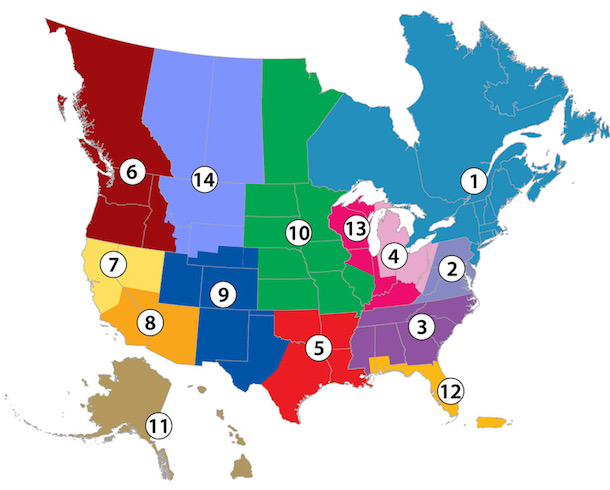
The map indicates the 8 geographical zones which we propose for subdividing the continental U.S. Regions into approximately equal membership districts. Until such time as the necessary changes to the Bylaws can be introduced, discussed, and voted upon, we shall utilize the talents of some National Committed Chairman and Officers on a dual capacity.
This expanded administrative system should provide an experienced and well-informed group of candidates for future National Officers, along with the capable Regional Presidents and Directors. Only by taking such steps can PCA be assured of continued growth and development.
A few things to note from this.
The concept was put in place before the membership voted on it. Therefore, the first Zone Reps (called Zone Coordinators at the beginning) would all be current National staff serving dual roles.
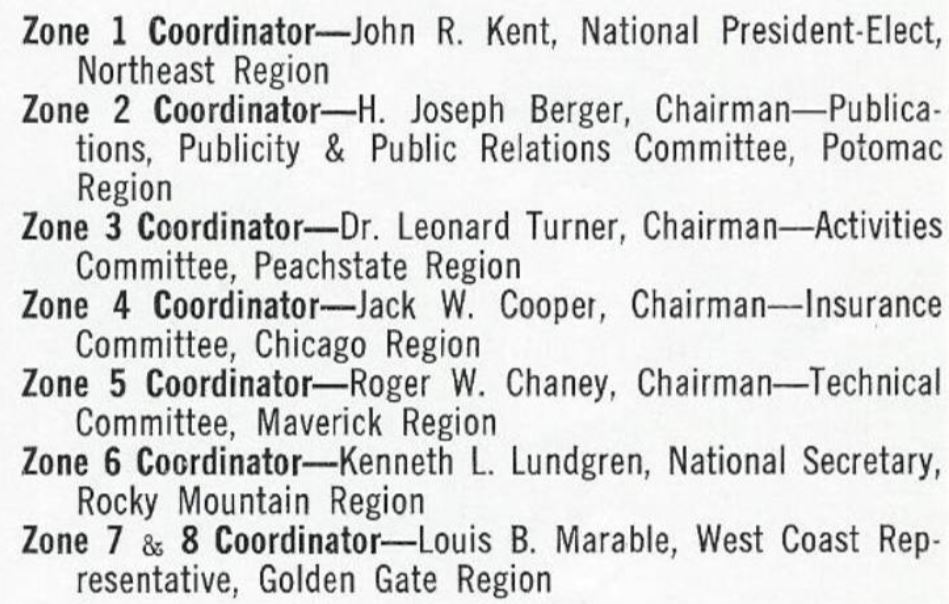
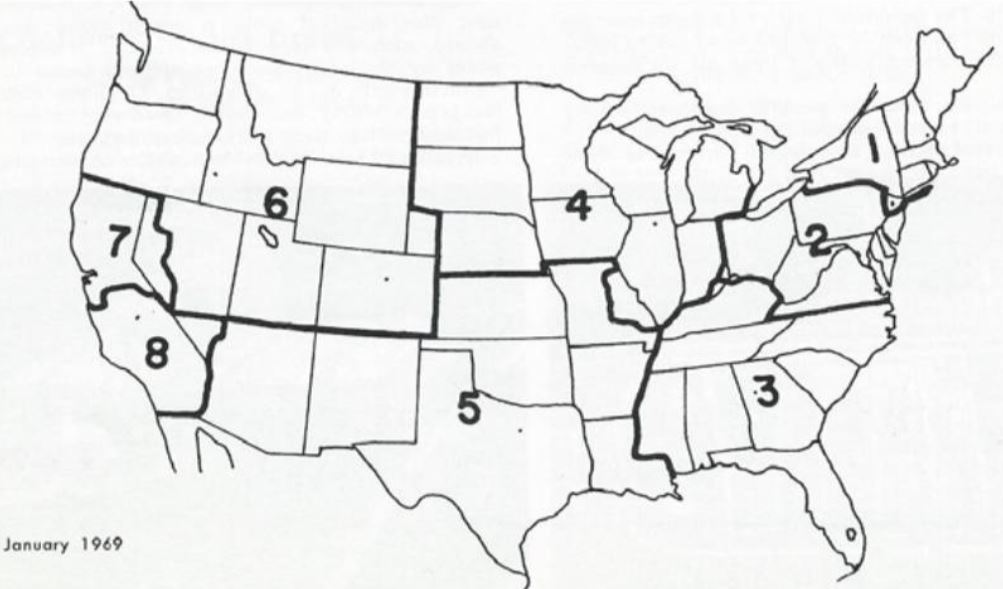
Lou Marable was assigned Zone 7 and 8 for the first year. This was actually less work for him as he had been the “West Coast Coordinator ” for several years. That position had been established back in 1957 when Jack Case, who was PCA Vice President at the time, moved to the LA area. The West Coast Coordinator was similar to what would become the Zone Reps.
There were no term limits for Zone Reps back then. Leonard Turner was the First Zone 3 Rep and served in that position for 19 years. Others served more than 10 years.
The Zone 1 coordinator was John Kent, listed as National President-Elect. This was what we called the Vice President those days; John was never PCA President.
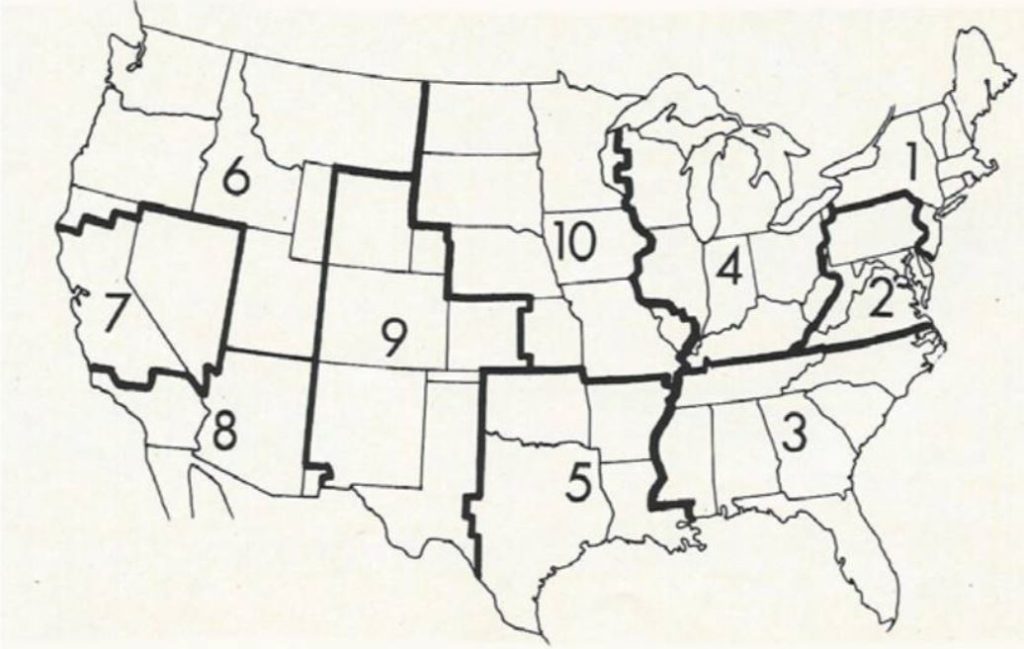
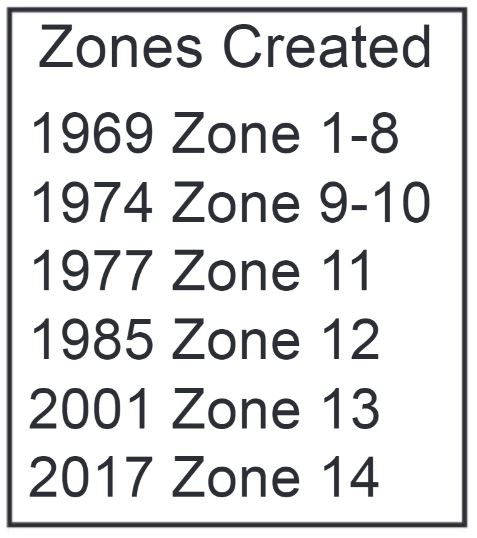
The zone boundaries changed many times, not just when new zones were formed.
I will not list the dates and territory involved for all these smaller changes. However, they are available in the Region Boundary Project document if needed.
You can see that all Zone boundaries changed as Zone 9 and 10 were added.
Before the Zone Representatives
Did you know there was a similar position back in the 50’s?
At the first National business meeting in August 1956 the newly formed Executive Committee appointed 14 people, spread around the country, to the position of “PCA Regional Executives”. By the next meeting in 1957 the number had climbed to 21, and the name was changed to “Regional Directors “.
One of their jobs was to encourage groups in their area of responsibility to form Chartered Regions; another job was to write letters of complaint about poor ser vice from dealers to Porsche!
A few of the new Region Execs did not know they were appointed to the job until they received the letter below (written on Arthur Murray Dance Studio letterhead no less).
As Chartered Regions were formed over the next few years, the Region Execs/ Directors names slowly disappeared from the contacts list in Panorama. Some became Region Presidents as Chartered Regions were formed, while some maintained both President and Director titles. I do not see any mention of Region Execs/Directors after 1959; however, there was a “West Coast Co ordinat or” through 1968. The general membership was informed of the new Regional Executives in the Aug 1956 Pano.
Original at https://ww2.pca.org/pca-history/#page=1